Naughty Random Live Video Chat
- 4.1
- Rating
- 100.00K
- Installs
- Free
- Price

 Analysis by App-foxy
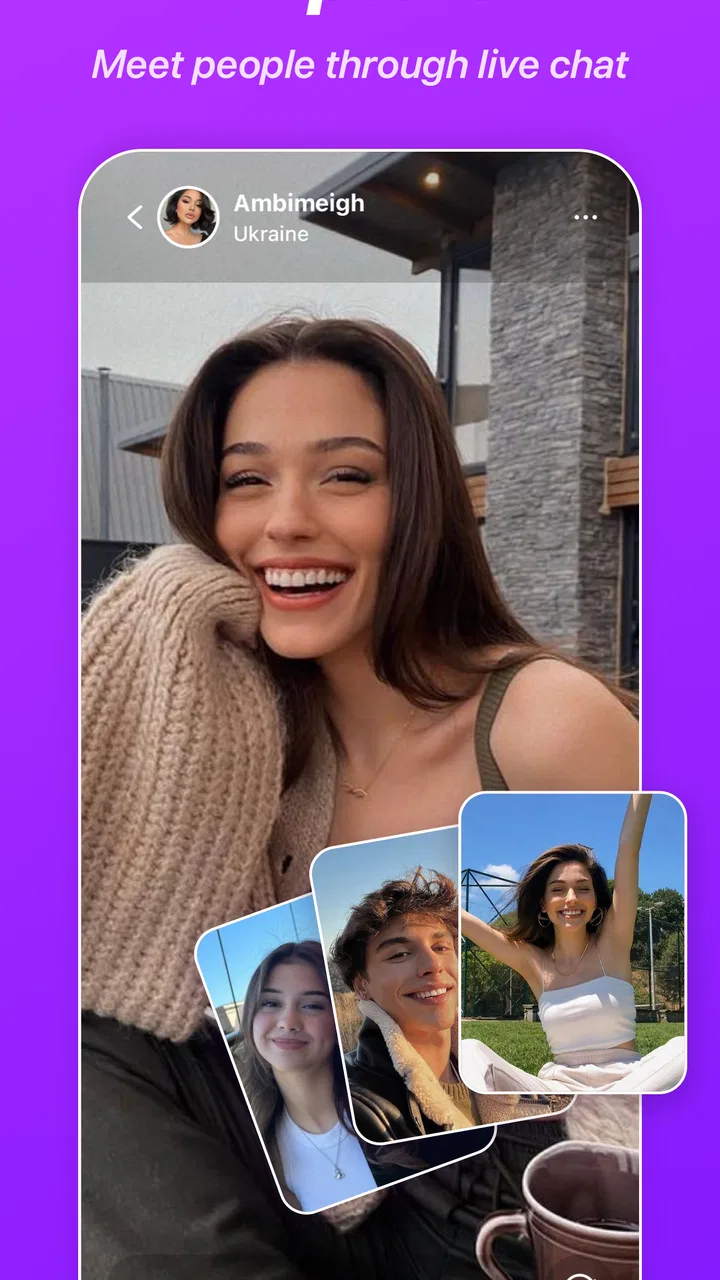
I approached Naughty Random Live Video Chat as a social app for people who want quick conversations with strangers through text, voice, and video. Its basic appeal is easy to understand: instead of building a contact list first, you enter a space designed around spontaneous communication. That can feel more immediate than a traditional social network, but it also makes trust and personal boundaries much more important than they are in an ordinary messaging app.
My overall impression is mixed in a useful way. The app can be entertaining when I treat it as a casual conversation tool rather than a place to form instant trust. At the same time, the mature audience, random-contact format, and live communication model mean I would not recommend using it carelessly. The best experience depends less on how quickly a chat begins and more on how confidently you can end one, control what you reveal, and recognize when a conversation is no longer comfortable.
How the app fits into the social chat landscape
Leading Edways Ltd presents the app as a free social experience, and its store summary focuses on communication across text, voice, and video. That combination puts it closer to random-chat services than to familiar platforms such as group messengers, community forums, or social networks built around people you already know. The difference matters: with a normal messenger, the identity and context of the other person usually come first. Here, the conversation is the starting point.
You May Also Like

 Pandora - Music & Podcasts
Pandora’s Music Is Easy to Start, but Harder to Recover
Pandora’s strength is its low-effort path from a seed to a station. Its weak spot is how much confidence it asks you to place in connection, setup, and quiet recovery.

 8 Ball Pool
 Is Built on Rivalries, Rematches, and Routine
A close look at the rivalries, rematches, shared routines, and unanswered safety questions that turn a quick pool match into a persistent mobile community.

 Samsung Music
’s Quiet Strength Is Playing What You Already Own
Its reach comes less from spectacle than from dependable access to a personal library. That simplicity is both the app’s strongest retention engine and its ceiling.

 AccuWeather: Weather Radar
AccuWeather Review: A Quick, Clear Forecast for Everyday Decisions
For everyday plans, the best forecast is the one you can understand quickly. AccuWeather makes rain timing, radar, and local conditions easy to act on, with a few trade-offs.

 Hill Climb Racing
Why Hill Climb Racing Still Turns Crashes Into One More Run
A tiny car, a bumpy hill and one more upgrade: Hill Climb Racing keeps resurfacing because its simple chaos makes every near-miss feel personal.

 AliExpress - Shopping App
AliExpress Makes Global Shopping Feel Personal, but Shoppers Bear the Risk
AliExpress turns a global marketplace into a pocket-sized discovery engine. Its reach is useful, its shopping loop compelling, and its trade-offs easy to miss.
More From Our News Desk
View All News


I found that this makes the app appealing for short, low-commitment interactions. Someone who is bored, curious, or simply interested in meeting people outside their usual circle may enjoy the unpredictability. It is also a reasonable option for users who prefer live conversation over carefully edited profiles and long feeds. However, the same randomness that creates novelty also removes much of the context that helps people judge whether another user is genuine, respectful, or suitable to talk to.
The app is free to install, which lowers the barrier to trying it. Its listing shows a mature audience classification of 17+, so I would take that seriously rather than treating it like a general-purpose family chat app. The current version is 60.0.18 and it requires Android 8.0 or later. On the broader store page, it has an average rating of 4.1 from around 1.9 thousand ratings, with more than 100 thousand installs. Those figures suggest a real user base, but they should not be mistaken for a guarantee that every interaction will be positive or well moderated.
There are also optional purchases, ranging from $1.99 to $144.99 per item. That is the point where I would slow down before spending anything. A free entry price is useful for testing the basic experience, but in a random-chat app I would first decide whether the conversations, controls, and overall atmosphere suit me. I would not buy anything simply because a chat feels exciting in the moment.
Trust begins before the first conversation
For this kind of service, trust is not just about whether the app opens reliably. It is about understanding what I am choosing each time I move from text to voice or video. Text gives me more time to think and less exposure. Voice adds personal information through tone and background sounds. Video reveals far more, including my appearance, surroundings, habits, and sometimes other people who happen to be nearby.
That progression creates a practical rule I would recommend: start with the least revealing format and move forward only when the conversation has earned it. A person who immediately pressures me to switch from text to video has already given me useful information about their approach. I do not need to justify staying in text, and I would end the interaction if the pressure continued.
The mature classification is another important trust signal, not because it tells me that every user behaves badly, but because it sets a clear expectation about the environment. I would not let a younger family member use it casually, and I would avoid treating it as a harmless boredom app. Adults who are comfortable with unplanned conversations may find the format interesting; anyone looking for a tightly controlled social space should probably choose something with a more familiar contact model.
Controls matter more than the novelty
When I evaluate an app built around random communication, I pay attention to the choices available at uncomfortable moments. Can I stop a conversation without negotiating? Can I refuse to move to a more personal format? Can I leave without explaining myself? These are more important to me than decorative profile options or the promise of meeting someone new.
The most useful workflow is to decide my boundaries before opening a session. I would choose whether I am willing to use video at all, whether I want to share my voice, and what topics are off limits. That sounds simple, but making the decision in advance prevents the other person from setting the pace. It also makes it easier to leave when a chat stops feeling natural.
I would keep personal identifiers out of the conversation until I had a strong reason to trust the other user. That includes my full name, workplace, school, address, regular schedule, and links to personal accounts. Even small details can combine into a surprisingly clear picture. Saying that I live near a particular landmark, work unusual hours, and visit the same place every weekend may seem harmless separately, but together those details can make me easier to identify.
A useful habit is to check the background before enabling video. I would remove visible documents, delivery labels, school materials, distinctive photographs, and anything showing where I live. I would also use headphones when appropriate, both for privacy and to avoid accidentally broadcasting someone else’s conversation. These are not app-specific buttons; they are user-side controls that make live communication safer when the environment itself cannot be fully trusted.
I would also treat blocking, reporting, and leaving as normal parts of the experience rather than emergency measures. If a conversation becomes sexual, aggressive, manipulative, or simply unpleasant, there is no benefit in staying to prove that I am polite. A healthy social app should leave room for a quick exit. If I find that I am hesitating because I do not want to offend a stranger, I remind myself that ending a random chat is a normal user choice.
The sensitive moments are easy to overlook
The biggest privacy risk is not necessarily the first message. It is often the moment when the interaction becomes more personal. A stranger may ask to see the room, request a different camera angle, ask whether I live alone, or suggest moving to another service. Each request can seem minor, especially when the conversation has been friendly. I would judge these requests by whether they are necessary for the conversation. Usually, they are not.
Moving outside the app deserves particular caution. A new platform may expose my username, profile photo, phone number, or other connections depending on the service. It can also make it harder to separate this interaction from my everyday identity. I would not switch services simply because the other person says the current chat is inconvenient. If the conversation is worthwhile, it can continue without rushing me into a less controlled setting.
Live video also changes the privacy equation because it is difficult to know what the other person is doing on their side of the screen. I cannot assume that a friendly participant is not recording, showing the call to someone else, or saving details for later. I would avoid appearing on camera in situations that could embarrass me if captured, and I would never share intimate material with a stranger. Once something is visible, I lose control over where it may go.
Voice has its own sensitivity. My accent, language, background noise, and the voices of people around me can reveal more than I intend. If I am calling from home, I would make sure that family conversations, smart-device announcements, or location-specific sounds are not being broadcast. Text is not automatically risk-free either: screenshots, copied messages, and shared usernames can still connect the conversation to my wider identity.
Because the app is free to enter but includes purchases, I would be especially careful during emotionally engaging conversations. A user who makes me feel that I need to pay to keep attention, unlock a better interaction, or avoid losing a connection is creating pressure. I would close the purchase screen and think later, away from the conversation. The safest spending decision is one made when I am calm, not when I am trying to impress or retain a stranger.
Who gets the most from it
I think the app suits adults who enjoy brief, unpredictable conversations and are comfortable managing their own boundaries. It can work for someone who wants to practice casual conversation, hear different viewpoints, or break out of the repetitive cycle of scrolling through familiar social feeds. The text, voice, and video choices also let users decide how much immediacy they want, at least in principle.
A realistic everyday use case would be a quiet evening when I have twenty minutes free and want a conversation without committing to a new online community. I would enter with a narrow goal: try a few text exchanges, move to voice only if the person seems respectful, and stop when the session no longer feels worthwhile. That approach keeps the app in its proper role as a temporary social activity rather than allowing a random contact to become part of my personal life too quickly.
It may also suit someone who dislikes the performance involved in building a polished social profile. There is less need to prepare a carefully written biography before speaking. The trade-off is that I receive less useful context about the other person. If I prefer to choose contacts based on shared interests, mutual friends, detailed profiles, or established communities, a forum, group chat, or conventional social network will probably serve me better.
I would skip it if I am looking for dependable identity verification, professional networking, long-term friendship building, or a calm space for younger users. I would also avoid it during periods when I am feeling lonely enough to overlook warning signs. Random live communication can be enjoyable, but loneliness can make attention feel more meaningful than it really is. In that situation, a moderated community with shared interests and clearer social expectations would be a wiser choice.
How it compares with familiar alternatives
Compared with a standard messaging app, this service offers more spontaneity but less predictability. A normal messenger is strongest when I already know who I want to contact. It preserves an existing relationship and usually gives me more context. This app reverses that order: I meet the conversation first and decide whether the person is worth further attention later.
Compared with a social network, it is less centered on a public identity and ongoing feed. That can feel refreshing because I am not required to maintain a visible profile or compete for attention through posts. The downside is that a feed can provide clues about a person’s interests, history, and social connections, while a random chat may offer only whatever the other user chooses to say in the moment.
Compared with interest-based communities, the app is faster but less focused. A hobby forum or group chat gives me an immediate subject to discuss and a shared reason for being there. Here, the subject may be the only thing we have in common. I would choose the random-chat format for novelty and the community format for depth, accountability, and repeated contact with people who share my interests.
Video meeting tools are another useful comparison. They are generally designed around known participants, planned calls, or organized groups. This app is more casual and unpredictable, which is its central attraction. If I need a reliable conversation with a friend, colleague, or family member, I would not replace a familiar video tool with a random-chat service. The two formats solve different problems.
Small habits that improve the experience
I would use a separate identity for casual exploration whenever possible, without connecting it to accounts that expose my everyday contacts. I would also avoid reusing a distinctive username or profile image from other services. This is one of the most effective ways to prevent a brief conversation from becoming an easy path to my wider online presence.
I would keep the first exchange short and observe how the other person reacts to ordinary boundaries. Saying that I prefer text, do not share personal details, or need to leave soon gives me a quick test. Respectful users accept those limits. Pushy users argue, guilt-trip, or repeatedly ask the same question. That response tells me more than a charming introduction does.
Another practical tip is to separate curiosity from commitment. I can enjoy meeting someone without promising another conversation, sending money, sharing private media, or moving to another app. If a person claims that our connection is unusually special after only a few minutes, I would treat that as a reason to slow down rather than a reason to trust faster.
I would also review my own behavior after each session. Did I reveal something I would rather keep private? Did I feel pressured to stay? Did I spend money because I genuinely wanted an optional feature, or because I was trying to hold someone’s attention? These questions help me decide whether the app is adding harmless entertainment or creating stress. If the answer is repeatedly stressful, uninstalling it is a sensible form of user control.
My cautious verdict
I see this as a narrowly useful social app rather than a replacement for every other way of communicating. Its strength is immediacy: I can move from curiosity to a live exchange without first building a network. Its weakness is the same thing. Random access means I have to supply the judgment, patience, and privacy discipline that a familiar relationship or moderated community might provide.
The app’s free entry makes experimentation straightforward, while the mature age classification and optional purchases mean I would approach it as an adult service with real boundaries, not as an innocent time-killer. I would test it through text first, keep video optional, avoid personal identifiers, and make no purchase until I understood whether the experience genuinely suited me.
My recommendation is therefore conditional. If you are an adult who enjoys spontaneous conversations and can leave quickly when something feels wrong, this app is worth a careful trial. If you need strong identity context, predictable contacts, family-friendly communication, or structured communities, I would choose a conventional messenger, interest group, or established social network instead. For me, the deciding feature is not the promise of meeting someone random; it is whether I remain in control from the first message to the moment I close the chat.
FAQs for Naughty Random Live Video Chat
01What is Naughty Random Live Video Chat?
Naughty Random Live Video Chat is a social video-chat app designed to help users meet and talk with people they do not know through live, random video connections. Depending on the available features and region, users may be able to start one-to-one conversations, send messages, and move to another chat quickly. Because interactions are user-generated, the experience can vary considerably from one session to the next.
02Is Naughty Random Live Video Chat safe for everyone?
The app may not be appropriate for children or younger teenagers because random video-chat platforms can expose users to mature, suggestive, or otherwise unsuitable behavior. Before downloading, check the official age rating, privacy policy, and safety tools. Never share your full name, address, school, workplace, passwords, financial details, or private photographs, and leave or report any conversation that makes you uncomfortable.
03Does Naughty Random Live Video Chat require registration or personal information?
Requirements can differ according to the version, operating system, and country. The app may request an account, a nickname, camera and microphone permissions, or access to limited profile information. Review every permission before accepting it, and use the minimum information necessary to create a profile. If an account is required, choose a unique password and avoid connecting more social accounts than you actually need.
04Is Naughty Random Live Video Chat free to use?
The application may be available to download at no initial cost, but free access does not always mean that every feature is free. Random matching, filters, virtual items, premium memberships, or extended chat options may involve in-app purchases, advertising, or usage limits. Check the store listing and payment screen carefully, and review subscription terms so that a trial does not unexpectedly become a recurring charge.
05What should I do if I encounter inappropriate content or harassment?
If another user behaves abusively, displays explicit material, requests personal information, or attempts to pressure you, end the conversation immediately and use the app’s block and report functions if available. Do not respond with private details or agree to meet offline. Save relevant evidence when appropriate, review your privacy settings, and contact the platform’s support team or local authorities if there is a credible threat.
Pros
- Quickly connects you with new people through live video chat.
- Simple interface makes starting a conversation easy for beginners.
- Offers a spontaneous way to meet users from different locations.
- Video interaction can feel more personal than text-only messaging.
- Useful for casual conversations when you want immediate social contact.
Cons
- Random matching may lead to uncomfortable or inappropriate interactions.
- User availability and conversation quality can vary significantly.
- Requires a stable internet connection for smooth video calls.
- Privacy can be difficult to control when speaking with strangers.
- May not be suitable for younger users without careful supervision.

Naughty Random Live Video Chat
Gallery